

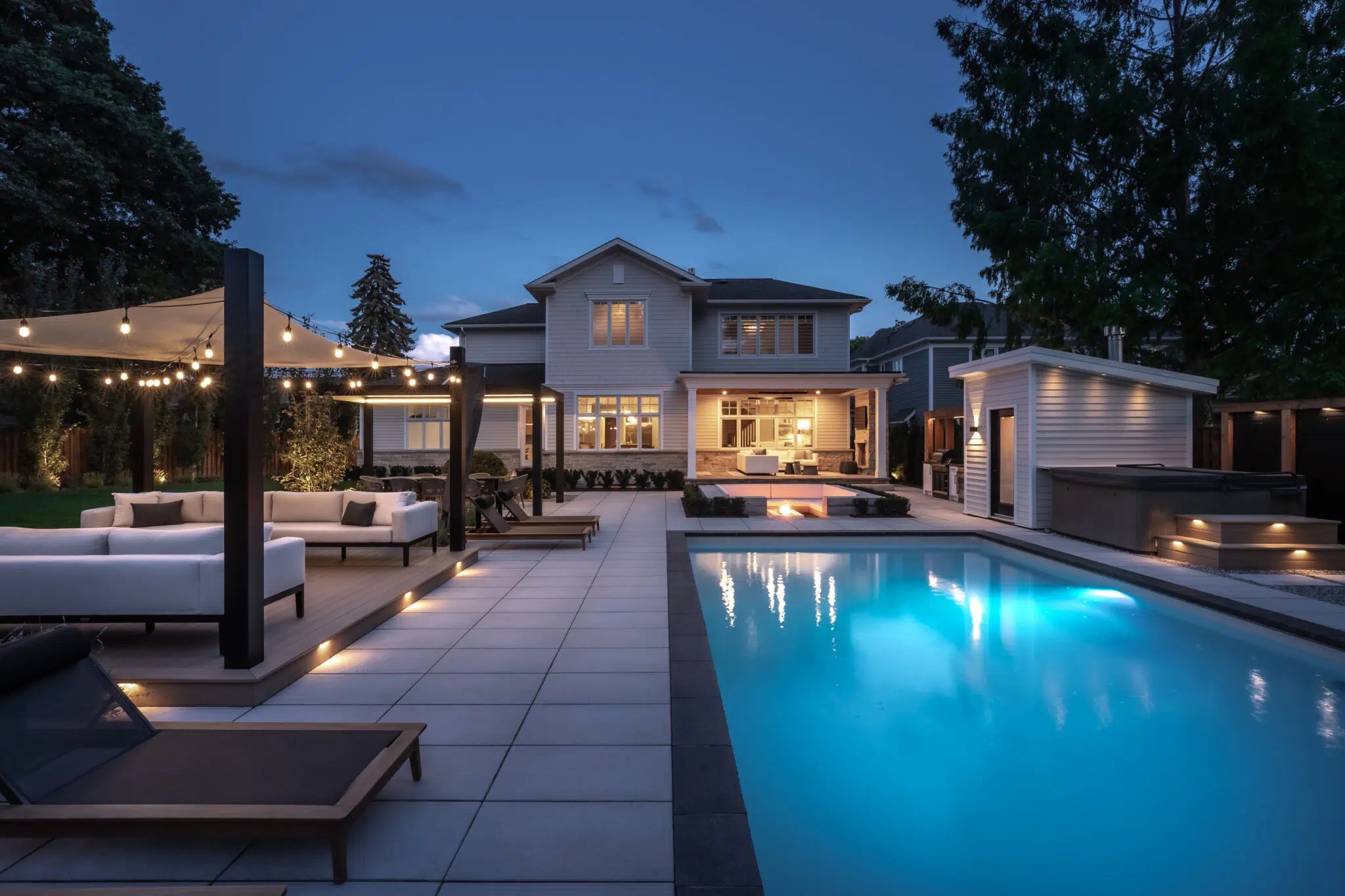
If you’re planning a significant outdoor project, you’ve likely come across the term design build landscaping Oakville. It sounds efficient—and it can be—but many homeowners aren’t entirely sure what it actually means, or whether it’s the right fit for their project.
This article breaks down the design-build landscaping approach, how it differs from traditional methods, and why it’s often the preferred option for Oakville homeowners investing in high-quality, long-term outdoor spaces.
What Is Design-Build Landscaping?
Design-build landscaping is a single, integrated approach where one team is responsible for both the design and construction of your landscape.
Instead of hiring:
- a landscape designer or architect first, and
- a separate contractor later to interpret and build it,
you work with one unified team from concept through completion.
For homeowners, this typically means:
- Fewer handoffs and misunderstandings
- More accurate budgets earlier in the process
- Better alignment between design intent and final build
Why Design-Build Landscaping Works Well in Oakville
Oakville landscape projects often involve more than simple planting or paving. Mature neighbourhoods, tight setbacks, conservation considerations, and higher expectations around craftsmanship all raise the bar.
From our experience working throughout Oakville, the design-build model works particularly well because it:
- Accounts early for municipal constraints, grading, and drainage
- Aligns design ambition with realistic construction methods
- Reduces surprises caused by soil conditions or existing structures
Local permitting, tree protection, and lot grading requirements can materially affect both timelines and costs. Integrating design and construction helps surface these factors early—rather than mid-build.
For reference, the Town of Oakville outlines specific requirements related to grading, drainage, and site alterations (Town of Oakville [https://www.oakville.ca]).
Design Build Landscaping Oakville: What Homeowners Should Expect
Understanding how design-build differs from traditional delivery models is essential when evaluating the landscape construction process.
Traditional (Design–Bid–Build)
- Designer creates plans
- Contractors bid on the drawings
- Lowest bid often wins
- Adjustments happen during construction
This approach can work, but changes, clarifications, and cost overruns are common when the builder wasn’t involved during design development.
Design-Build Landscaping
- Design and construction teams collaborate from day one
- Budgets are refined alongside the design
- Materials, methods, and sequencing are planned together
- Construction more accurately reflects the original intent
For complex outdoor projects, fewer assumptions usually lead to better results.
The Design-Build Landscaping Process (Step by Step)
Here’s how a typical design build landscaping Oakville project unfolds:
- Initial Consultation Project goals, priorities, site conditions, and budget ranges are discussed early.
- Concept Design Layouts, circulation, features, and materials are explored with buildability in mind.
- Budget Alignment Costs are refined as designs evolve—not after drawings are finalized.
- Detailed Design & Approvals Construction details, grading, drainage, and required approvals are addressed before work begins.
- Construction & Project Management The same team that helped design the space builds it, ensuring continuity and accountability.
You can see how this approach is structured on our design-build landscape process page:
What Most Homeowners Don’t Realize
One of the most common misconceptions is that design-build limits creativity. In practice, it often protects it.
When designers understand construction constraints early—material lead times, drainage realities, winter scheduling, and Ontario’s freeze–thaw cycles—they can design outdoor spaces that are both ambitious and achievable.
Industry organizations like Landscape Ontario consistently emphasize integrated planning as a way to reduce risk and improve project outcomes (Landscape Ontario [https://landscapeontario.com]).
Timeline Reality Check for Oakville Projects
Because this article is scheduled for winter, timing is worth addressing directly.
Winter is often when:
- Design work happens most efficiently
- Permitting and approvals are addressed
- Construction schedules for spring and summer are secured
Design-build projects that begin planning in winter are typically better positioned once construction season begins.
Budget Reality Check
Design-build doesn’t mean cheaper—it means clearer.
For Oakville homeowners, the value lies in:
- Fewer change orders
- Better cost control during design
- Decisions made with full visibility into construction implications
Higher-investment projects benefit most from this level of clarity.
Is Design-Build Right for Your Project?
Design-build landscaping is especially well suited if:
- You’re planning a multi-phase or feature-rich backyard
- You value collaboration and transparency
- You want fewer surprises once construction starts
If you’d like to better understand the team behind the process, you can learn more here:
Planning Your Next Step
If you’re considering design build landscaping Oakville, the best time to explore your options is often before drawings exist and budgets are locked in.
Early conversations help clarify:
- Feasibility
- Timing
- Investment range
- Planning priorities
When you’re ready to discuss your project in more detail, you can start the conversation here:
Design-build landscaping isn’t about shortcuts—it’s about alignment. For Oakville homeowners investing in long-term outdoor spaces, that alignment can make all the difference.